6 best publisher value proposition examples for subscription journeys
2026-06-096 min read
2026-06-096 min read

Most publisher subscription journeys do not fail because the product has no value.
They fail because the value is not made clear at the moment the reader is being asked to act.
A reader may be asked to register before they understand the benefit. They may hit a paywall before the paid value feels obvious. They may land on an offer page that lists features but does not explain why those features matter.
For publishers, value proposition is not just a line of copy on the subscription page. It should appear across the whole journey: registration, paywall, offer page, checkout, onboarding and retention.
The strongest publisher value propositions answer one question clearly:
“Why should this reader take the next step now?
A publisher value proposition is the reason a reader believes an account, newsletter, subscription or membership is worth their attention, data or money.
It should make the exchange clear.
Register because the experience becomes more relevant.
Subscribe because the coverage helps you understand something important.
Stay because the product has become part of your routine.
The best value propositions are specific to the reader’s stage in the subscription journey.
Below are six useful value proposition types publishers can use across registration, paywalls, offer pages and onboarding.
1. The access value proposition
This is the most familiar subscription value proposition. It works when the paid product clearly gives readers access to something they cannot get for free.
It is especially useful for:
If the value proposition is access, make it specific. The reader should understand not only that they get more content, but why that content is worth paying for.
2. The expertise value proposition
The expertise value proposition works well for publishers with strong specialist authority: business, politics, finance, science, policy, culture, sport or industry coverage.
The reader is not only paying for articles. They are paying for judgement, context and expertise.
This value proposition is useful when the subscription product helps readers:
3. The habit value proposition
This value proposition is about routine.
It works well for newsletters, apps, briefings, podcasts and daily editions. It is less about “unlocking content” and more about becoming part of the reader’s day.
Habit-based value propositions are useful because retention often depends on repeated use, not just initial conversion.
They work well in:
4. The brand world value proposition

Some publisher value propositions are not built around access, price or features. They are built around the world the publication invites the reader into.
This works best for publishers with a distinctive voice, strong brand recognition or a clear editorial personality.
It is especially useful for:
5. The mission value proposition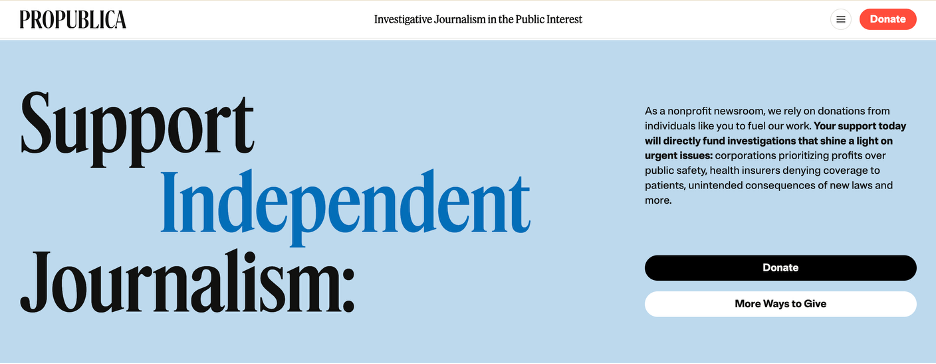
This value proposition works when the reader feels aligned with the publisher’s role, values or public purpose.
It is often powerful, but it has to be handled carefully. “Support us” is not always enough. The reader still needs to understand what their support makes possible.
A stronger version connects mission with reader benefit:
“Support independent reporting that helps our community stay informed, represented and heard.”
Mission-led messaging can be useful in:
6. The proof and prestige value proposition
Some value propositions work by reducing doubt. They show the reader that the publication is worth paying for because it has recognised authority, awards, reputation or cultural weight.
The New Yorker’s “Pulitzer Prize-winning journalism” prompt is a proof-based value proposition. It gives the subscription ask credibility without needing to explain every benefit.
This type of messaging is useful when the publisher has strong trust signals, such as:
The best publisher value proposition examples work because they are specific to the moment.
A first-time reader may need trust.
A repeat reader may need relevance.
A registered reader may need a reason to pay.
A new subscriber may need help building a habit.
An existing subscriber may need a reminder of what they rely on.
That is why value proposition should not live only on the subscription page.
It should shape the whole subscription journey: registration, paywall messaging, offer pages, checkout, onboarding and retention.
If those messages feel disconnected, the issue may not only be copy. It may be the journey logic behind it.
Request a subscription journey audit
Request your audit