New Scientist Migration from previous user authentication provider to Piano ID
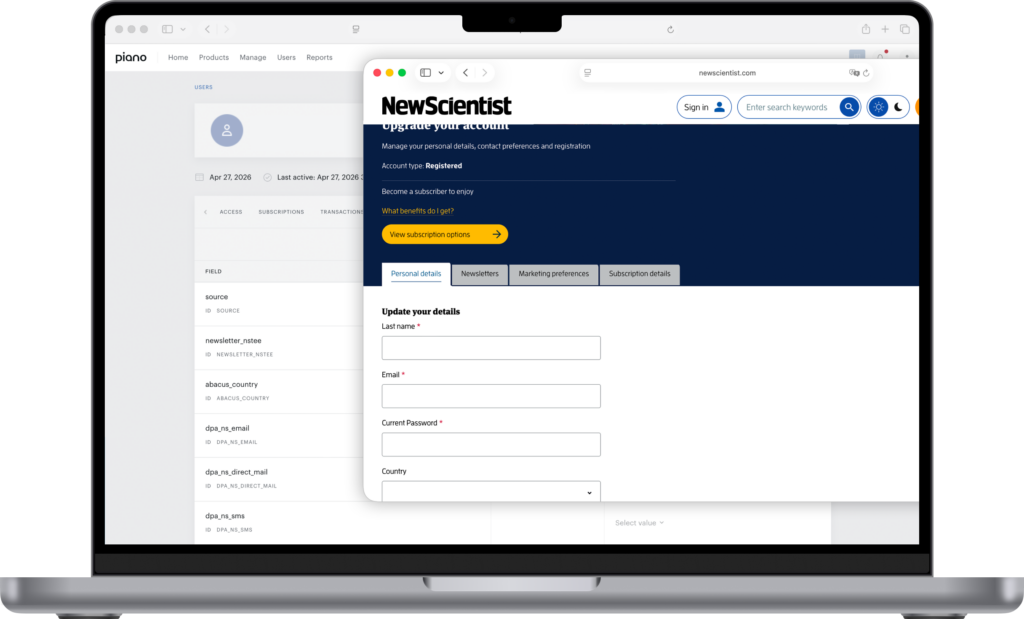
For publishers, migrating an identity system is a high-risk undertaking because it impacts every aspect of the user relationship. If login, content access, permissions, or user preferences fail to function as expected, the consequences are immediate: frustrated subscribers, increased support requests, disrupted access, and a loss of trust.
New Scientist needed to migrate a complex user identity and account-management ecosystem from the old user authentication provider to Piano ID. The project encompassed the key user journeys and underlying systems that support registration, authentication, user profiles, subscription access, and communication preferences.
Optiten delivered the migration across the full identity stack, coordinating the transition of authentication, account management, and external identity integrations to Piano ID. The engagement also covered target-state data modelling, field mapping, integration design, and end-to-end validation across connected systems, ensuring continuity of access for users throughout the migration.
New Scientist is a globally respected publisher with a long-standing reputation for intelligent, accessible science journalism. Its brand combines editorial authority with broad reader appeal, supported by a subscription-led model and a well-established position in the international publishing market.

key challenges
SOLUTIONS
New Scientist relied on a complex legacy identity management ecosystem built around a third-party authentication provider. As the company’s digital products and subscription offerings evolved, the architecture became increasingly complicated, with key user-related processes distributed across multiple systems and custom-built components.
The migration to Piano ID was the first step toward simplifying this environment and establishing a centralized user identity management platform.
The project extended far beyond a simple data migration. It involved implementing a complete identity management layer responsible for user registration, authentication, profile management, subscription access, communication preferences, and integrations with external systems.
Optiten supported the implementation and integration of key user journeys powered by Piano ID, including:

Integration with Piano VX and the Subscription Ecosystem
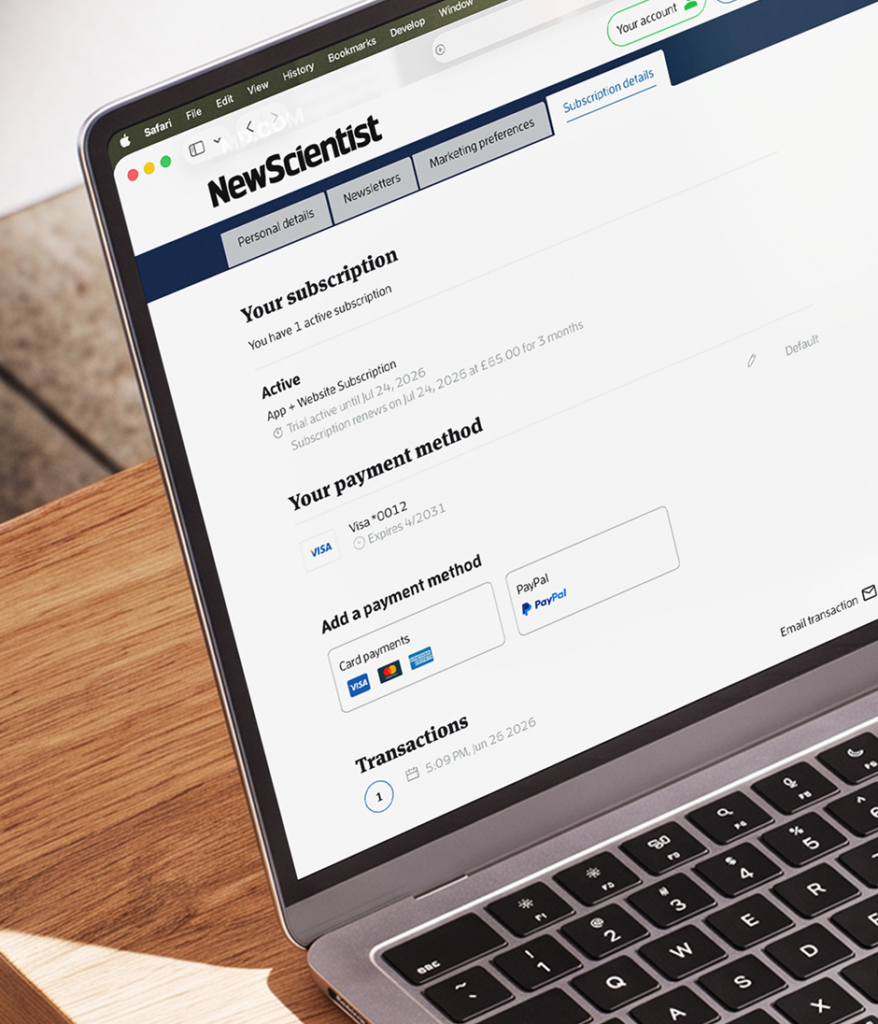
A key element of the project was integrating Piano ID with subscription access and entitlement management processes handled by Piano VX.
The new architecture enabled user data, subscription statuses, and access logic to be managed consistently within a single ecosystem.
The project also included the migration of communication preferences and the integration of newsletter subscription forms with Sailthru, ensuring unified management of user communications within the new environment.
The migration involved a large base of existing users and business-critical data supporting subscription services. Particular attention was given to maintaining uninterrupted account access, ensuring data quality, and minimizing the impact of the transition on end users.
Optiten supported the preparation and validation of the migration process, including:
OUTCOME AND IMPACT
The migration to Piano ID enabled New Scientist to establish a modern, scalable identity management environment that supports both day-to-day operations and the continued growth of its digital and subscription products.
Instead of maintaining fragmented user management processes built around legacy integrations and custom components, the organization now benefits from a centralized identity platform integrated with the Piano ecosystem and designed to support future business needs.
Key business benefits
| Before migration | After migration |
|---|---|
| A legacy authentication provider served as the central identity system | Piano ID became the central platform for user identity management |
| User-related processes were distributed across multiple systems | Core identity processes are managed within the Piano ecosystem |
| Extensive legacy integrations and custom-built components | User fields mapped and validated within the new Piano ID structure |
| Access management relied on synchronization between multiple systems | Access management relied on synchronization between multiple systems |
| Risk of inconsistent user data across systems | A verified and consolidated user database |
| Limited flexibility for future development | A scalable foundation for new digital products and services |
| Ongoing maintenance of a legacy identity management solution | Legacy authentication system retired, reducing technical debt |
The migration concluded with Piano ID fully assuming responsibility for user identity management and the retirement of the previous authentication platform. This reduced the number of systems involved in user management, simplified the overall technology architecture, and lowered the operational cost of maintaining the environment.
By centralizing identity management, New Scientist also established a strong foundation for the continued evolution of its subscription business. User profiles, account status, and entitlement data can now be managed within a single ecosystem, enabling more effective access management, content monetization, and long-term audience engagement.

Having the team involved gave me confidence from the outset. Their collaborative approach, clear communication and deep understanding of the platform meant the migration ran smoothly with no significant issues. They integrated seamlessly with our team and felt like a genuine extension of it, rather than an external supplier.
A focused diagnostic of your current Piano setup to uncover friction, spot performance loss, and identify next priorities.
Request your audit